This Journal features an article about a promising new drug to treat cancer. The article contains a link to the original research article which was reported in the journal Cancer Cell in October, 2025. This research was done by a team of investigators at Memorial Sloan Kettering Cancer Center.
This article is reprinted here from The Epoch Times newspaper, which features excellent health articles. Since this publication is behind a paywall, I am taking the liberty of copying and posting, with thanks and recognition to the author and the publication.
Please read on!
New Cancer Treatment Shrank Tumors in Half of Patients in Small Clinical Trial
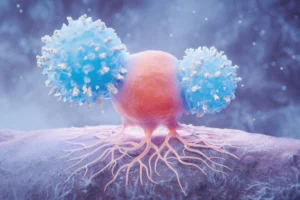
The treatment uses CD40 agonist antibodies, a type of immunotherapy that uses the body’s immune system to attack cancer.
While this drug class has shown promise for two decades, development has been hampered by severe side effects, including widespread inflammation, low blood platelet counts, and liver toxicity—even at low doses.
Systemic Response From Local Treatment
The trial included 12 patients with various advanced cancers, including melanoma, kidney cancer, and breast cancer. Six patients experienced tumor shrinkage, and in two of those cases, the tumors disappeared completely.
The drug’s effects were not limited to tumors that were directly injected with the drug; cancer tumors elsewhere in the body also shrank or were completely destroyed.
One melanoma patient had dozens of tumors on her leg and foot, but after multiple injections into just one tumor, all other tumors vanished. The breast cancer patient had tumors in her skin, liver, and lung that all disappeared following injection of a single skin tumor.
“This effect—where you inject locally but see a systemic response—that’s not something seen very often in any clinical treatment,” Dr. Jeffrey V. Ravetch, head of the Laboratory of Molecular Genetics and Immunology at Rockefeller University, stated. “It’s another very dramatic and unexpected result from our trial.”
None of the 12 patients experienced the severe side effects typical of previous CD40 therapies.
Tissue analysis confirmed that the drug stimulated immune activity within the tumors.
CD40 is a protein found on immune cells that, when activated, prompts the immune system to fight tumors and develop tumor-specific T cells. The enhanced 2141-V11 drug also engages a specific receptor on immune cells called Fc receptor, amplifying the immune response.
“We were quite surprised to see that the tumors became full of immune cells—including different types of dendritic cells, T cells, and mature B cells—that formed aggregates resembling something like a lymph node,” Osorio stated, emphasizing that these structures are associated with better treatment outcomes.
Addressing Treatment-Resistant Cancers
Dr. John Oertle, chief medical officer and cancer specialist at Envita Medical Centers, who was not involved in the study, told The Epoch Times that this approach could help treat cancers currently resistant to existing immunotherapies.
He explained that many resistant cancers exhibit “immune exhaustion,” where T cells become dysfunctional and unable to mount an effective attack against cancer despite their presence.
Injecting the CD40 agonist directly into a tumor may help “reprogram” the tumor microenvironment, restore immune vitality, and drive T cell infiltration, to break through treatment resistance, he said.
“However,” he noted, “This is rarely a one-size-fits-all solution. Designing combinations that are tailored to the patient’s specific disease biology and immune profile is critical to sustaining responses and improving overall outcomes.”
Severe Side Effects Had Slowed Development
Developing CD40 antibodies for cancer treatment has taken more than twenty years of research.
While animal trials showed these drugs to be effective in clearing cancer, human trials found they also caused widespread inflammation, low blood platelet counts, and liver toxicity—even at low doses.
However, in 2018, researchers at Rockefeller University’s Laboratory of Molecular Genetics and Immunology made a key breakthrough. Led by Ravetch, the team engineered an enhanced version of the CD40 antibody, 2141-V11, to boost immune system activation while minimizing harmful side effects.
The modified drug binds more tightly to CD40 receptors on human cells and is 10 times more potent at activating anti-cancer immune responses. Rather than administering the drug through traditional intravenous infusion, which often caused toxicity due to widespread CD40 receptors on healthy cells, in the recent clinical trial, published in October, researchers switched to injecting the drug directly into tumors.
Next Steps and Broader Impact
These findings have led to additional clinical trials in collaboration with Memorial Sloan Kettering and Duke University, which are currently in their early phases. These studies are exploring 2141-V11’s effects on cancers such as bladder, prostate, and glioblastoma, an aggressive and deadly brain cancer, with nearly 200 patients enrolled.
Researchers seek to understand why some patients respond to the drug while others do not. For example, the two patients whose cancers disappeared had high levels of T cells, immune cells that kill cancer cells, before treatment.
“This suggests there are some requirements from the immune system in order for this drug to work, and we’re in the process of dissecting these characteristics in more granular detail in these larger studies,” Ravetch stated.
As a broader challenge in cancer immunotherapy, Ravetch noted that only 25 to 30 percent of patients will respond to immunotherapy, so the biggest challenge in the field is to try to determine which patients will benefit from it.
“While this trial is early and the patient number is small, the fact that we’re seeing complete remissions in aggressive cancers from localized injection is a very encouraging sign,” Oertle said.”
Crestone and Beyond
Because this therapy is currently in an investigational status, it would not be available for general use at the present time.
However, it is just one example of potential new successful therapeutic options which will become available in the near future.
Combined with therapeutic genomics approaches and lifestyle medicine, the forthcoming new cancer therapies will help many people live longer and happier lives, and hopefully become free of cancer.
The ongoing development and integration of AI platforms will enhance the development of new cancer therapies.
Lifestyle changes for better health are foundational in helping people to be healthier and happier, and respond better to any conventional therapies.
I wrote about these ideas in a 2014 Journal entitled Cancer Therapy Today. This entry was a critique of how cancer is usually managed by the medical industry. Since I wrote that piece, I believe that the treatment paradigms are slowly shifting and improving.
Here is a quote from that Journal:
“In the near future of the next 10 years, conventional cancer therapies will become more pinpoint, less invasive, less systemically toxic, and more readily, openly, and efficaciously integrated with supportive holistic, biochemical, and natural therapies. Results of therapy will improve in a meaningful way for the first time since Nixon’s 1971 presidential mandates about the war on cancer. It will be health consumers and open minded physicians who drive the new paradigms of therapy. The pharmaceutical industry will resist this movement strongly, but the physician corps will begin to wake up to meaningful ways to assist their patients lives and health.”
Signing off from Crestone and Beyond
Additional Reading
- Phytochemicals…and a Great Seal of Natural Healing…the Great Seal of the American College of Surgeons has a nice message in its motif. This Journal entry is from October, 2016. I also explain my early leanings toward plant chemical herbal medicine.
- Culinary Medicine is Born Anew at Tulane’s Goldring Center…my medical school Tulane is the first medical school to offer classes in healthy cooking to the medical students and the citizens of New Orleans. This Journal entry is from June, 2013.
- Given 3 Months to Live, This Woman Transformed Her Mindset–And Her Health…a woman chooses gratitude in the face of breast cancer, and lives on. “Rather than letting the diagnosis consume her remaining time, Shen made a simple but radical choice: “No matter how long I have left, I will greet each day with joy and gratitude.” It wasn’t denial or blind optimism—it was a conscious choice about how she wanted to live, starting immediately. Three months later, doctors were stunned. Her once inoperable tumor had shrunk dramatically. Today, more than 15 years later, Shen is healthy, active, and cancer-free.”
- Niacinamide Found to Reduce the Risk of New Skin Cancers…posted here on 11-23-25. This article is one example of all the voluminous research which is showing the value of nutraceutical compounds in preventing and treating cancers. Here are some main points of this article: “Skin cancer affects one in five Americans, with nonmelanoma types like basal and squamous cell carcinoma making up most cases. Niacinamide, a form of vitamin B3, is found to offer a strong preventive effect…A recent study published in JAMA Dermatology associated niacinamide use with a 14% lower overall risk of developing additional nonmelanoma skin cancers, with the greatest benefit seen after the first cancer diagnosis…Earlier research showed that taking 500 milligrams of niacinamide twice daily reduced new nonmelanoma skin cancers by 23% and precancerous lesions by up to 15%…Niacinamide protects your skin by restoring NAD+ for DNA repair, reducing inflammation, supporting immune defenses, and strengthening the barrier that maintains moisture and resilience against environmental stress…For long-term use, smaller daily doses of 50 milligrams three times per day are safe and sustainable. Combining niacinamide with sensible sun exposure habits and good nutrition strengthens skin defense naturally.”
- How Metabolic Health and Inflammation Influence Cancer Risk…posted here on 12-21-25. “Chronic inflammation and broken metabolism create the conditions that allow cancer cells to grow, spread, and overwhelm your body’s natural defenses…Stress hormones like cortisol block glucose use and flood your system with fatty acids, forcing your cells into a backup energy mode that fuels tumors…A combination of vitamins B1, B3, and B7 restored clean energy production in lab models, stopping tumor growth and showing promise for shifting metabolism back toward health…Adding aspirin to this vitamin trio moved tumors from remission to complete disappearance in animal studies, with historical evidence showing these doses can be used safely…Simple daily choices — such as reducing seed oils, supporting vitamin D, calming gut inflammation, and balancing hormones — help lower chronic stress signals and protect long-term health.”
- Cancer Is Affecting More Younger People, and Big Pharma’s Treatments Are Making It Worse…posted here on 1-25-26. This is an enlightening article with an interview of Dr. Patrick Soon-Shiong, a surgeon and a prominent businessman who also owns the Los Angeles Times. Here are some of the main points of this article: “In an interview with Tucker Carlson, Dr. Patrick Soon-Shiong discusses rising cancer rates while emphasizing shifts toward younger patients…Soon-Shiong explains COVID-19’s spike protein attaches to ACE2 receptors throughout the body, causing persistent inflammation that may contribute to various health issues, including cancer…Soon-Shiong criticizes Big Pharma’s influence over regulatory processes, arguing this creates barriers for innovative treatments while favoring incremental changes to existing profitable drugs…Natural killer cells require adequate sleep, sunlight exposure, and whole foods to function optimally, forming your body’s frontline defense against cancer cells…Boosting your immune system is key in fighting against cancer. In addition to optimizing sleep, minimizing seed oil intake and optimizing your vitamin D levels are important strategies.”