This Journal is a reminder that having a grateful heart results in a healthier brain. Everything felt in the heart influences the brain.
Gratitude is not only the greatest of virtues, but is the parent of all others…Cicero (Roman statesman, 106-43 BC)
Here is a list of virtues for your consideration, from Gurumayi Chidvilasananda.
- Abundance
- Balance
- Clarity
- Compassion
- Courage
- Devotion
- Discipline
- Easefulness
- Forgiveness
- Freedom
- Generosity
- Gratitude
- Humility
- Intuition
- Joyfulness
- Kindness
- Love
- Mastery
- Niceness
- Openness
- Patience
- Quietness
- Resiience
- Steadfastness
- Thoughtfulness
- Trust
- Unity
- Vigilance
- Worthiness
- Yearning
- Zeal
I have reprinted an article which appeared in The Epoch Times in time for this year’s Thanksgiving time.
The formatting and spacing here is not perfect and could not be helped, but the author’s message is perfect and helpful.
The author, Arsh Sarao, is a health reporter. She holds a Master’s degree in Biotechnology and a Bachelor’s degree in Biology and Chemistry. She taught life sciences for 11 years before working as a health editor for 7 years. She focuses on health, wellness, and traditional value topics.
Thirty-two people lay in MRI scanners and silently expressed gratitude for their mothers. They then recalled someone they resented.
Gratitude comes from the Latin “gratitudo.”
It is an “attitude of reverence for what is good in life or goodness in the world,” Emiliana Simon-Thomas, science director of the Greater Good Science Center at the University of California–Berkeley, told The Epoch Times.
Gratitude is a moral emotion. Neuroscience has shown that being genuinely grateful primes the brain in tangible ways.
Inside the Grateful Brain
Gratitude is not about telling people to stay positive, Dr. Tatiana Denning, a family physician and Epoch Times contributor, told The Epoch Times.
“Gratitude is about helping people see that even when life is difficult, there are still things worth appreciating,” she said.
In your brain, two regions often compete: the amygdala, which perceives threat and drives aggression, and the prefrontal cortex, which helps you stay rational and override reactive emotional responses.
Being able to see the good in life helps us to maintain a broader perspective, especially during periods of hardship.
Denning said she often sees gratitude in her patients who are doing well.
“They weren’t necessarily free of problems, but they had a way of appreciating life as it came, rather than allowing whatever had gone wrong to overshadow everything else,” she said.
Gratitude is a skill you can train your brain to have.
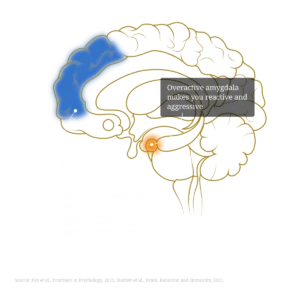
The more these neurons fire, the more likely your brain is to feel genuinely grateful.
Gratitude also triggers the release of dopamine and serotonin, making you feel the same joy you get from winning a video game or eating a sweet treat. The sense of reward from gratitude trains your brain pathways to notice more of the good.
Over time, gratitude rewires the brain.
“The brain processes information in patterns. What comes into mind more often is what neural pathways come to anticipate,” Simon-Thomas said. This means the more you notice the good, the more good you will see.
The Many Layers of Gratitude
On the surface, we can understand gratitude as being thankful for someone helping us, but at a deeper level, gratitude is resilience, creativity, and a way of living.
Just as money is a financial resource and food is a nutritional resource, positive emotions and virtues are resources for our mental energy. You can keep cultivating gratitude and let its positive energy accumulate.
Cultivating gratitude allows you to be less defined by your circumstances.
It doesn’t encourage escaping or suppressing negative emotions. Instead, it helps you see difficult moments as opportunities to learn and grow, Simon-Thomas said.
How you respond to a situation “makes a tremendous difference” in how you experience it, Denning said. The circumstances matter, of course, but how you think about a situation can influence whether you feel completely overwhelmed or can approach it step by step.
A person’s ability to shift between acknowledging life’s hardships and appreciating the good is central to cognitive flexibility, a key tool that builds creativity, Laura Kauffman, a California-based psychologist, told The Epoch Times.
“This helps people cope with the inevitable ups and downs of life. Not ignoring the storm—but notice that you do have shelter or someone to ride out the rain with you,” she said.
When a loved one has passed away, Denning reminds herself how fortunate she was to have the years she did with that person and how different her life would have been had their paths never crossed.
“It’s sort of like in the movie ‘It’s a Wonderful Life,’” Denning said. While she still grieves the loss, appreciating the time they shared helps her recognize her blessings and the impact her loved one had on her.
Gratitude makes you humble. It makes you aware of your strengths and weaknesses, and respectful of others. This shifts your focus to appreciating being alive, belonging to something greater than yourself.
Those who wrote letters of gratitude showed higher humility than the neutral-writing group. Writing gratitude letters had shifted people’s attention away from themselves, shifting self-focus to humility.
On the third day of the diary-writing task, an upward spiral was observed: Today’s gratitude predicted tomorrow’s humility, and today’s humility predicted tomorrow’s gratitude. The gratitude-humility relationship was mutually reinforcing—humility didn’t just follow gratitude; it amplified gratitude’s effect.
Tangible Benefits
In science, we talk about how positive forces attract negative; gratitude attracts gratitude, fostering “readiness to experience positive emotions,” Simon-Thomas said.
Beyond the mind, gratitude also benefits the body by activating the parasympathetic system, helping the heart recover more quickly from stress.
Ways to Practice Gratitude
Gratitude’s deeper power is a perspective shift, Kauffman said.
She suggests first checking how open you are to “letting in” the good. People often get stuck on solving the problem and summarizing lessons learned, hoping to protect themselves from getting hurt next time. But being overly self-protective also keeps you from connecting with the “warm and beautiful moments.”
Kauffman connects with gratitude through nature and meaningful interactions. She recalled a moment from young adulthood when she was working as a psychology intern helping parents at her hospital’s pediatric oncology unit; she felt overwhelmed and went outside to eat lunch under a tree.
As she ate, she looked up.
“I noticed the light filtering through the leaves, between the leaves, the gradation of green in the different leaves, and I was mesmerized,” she said. “It was so beautiful, and I felt this intense swell of awe and appreciation for the tree.”
In that moment, gratitude took Kauffman out of her funk.
Simon-Thomas practices gratitude by thanking others for three things.
“I say thank you to a person and describe what the person did that led to goodness, and I acknowledge the effort that they extended to do whatever they did—or even they might have foregone to do that led to goodness for me,” she said. “And I explain the goodness that their actions led to. I call this Gratitude 1-2-3.”
Research supports being as specific as possible in your thanks.
When you thank someone, personally or via text, mention his effort and add a few specific details. This makes your gratitude feel more sincere, regardless of the outcome.
Writing a gratitude letter offers another proven way to improve mental health.
Writing a gratitude letter likely mirrors the experience of thanking someone directly, unlike simply listing things you’re grateful for. In other words, writing to express gratitude can be more powerful than simply keeping a gratitude journal, Joshua W. Brown, a professor of psychological and brain sciences at Indiana University and coauthor of the psychotherapy study, told The Epoch Times.
For those still struggling to feel grateful, it’s OK to lick your wounds, Denning said.
“My intention is never to push someone into a place they’re not comfortable with or make them feel they’re coping the wrong way. Rather, I want to help them find a little inner peace and develop some coping mechanisms that can help them navigate difficult times,” she said. “There’s no single right way to do that; we each have to find what works best for us.”
People can do something really small, Denning said—find one thing you’re grateful for: “Even with everything I’m going through, is there something in my life that’s still good?”
It might be a small kindness someone showed, an available seat on the train, or a flower blooming in the yard.
“Sometimes, we can’t immediately change what’s happening around us, but we can gently widen our perspective to make room for something alongside what’s difficult,” she said.
Aside from this holiday season which reminds us to be thankful, gratitude in and of itself brings on powerful emotions of contentment, satisfaction, and resilience. Health benefits begin to accrue and grow.
Gratitude can be practiced and developed as a precious component of our daily lifestyle.
There is a growing abundance of research on the benefits of spending a few minutes expressing, writing about, or contemplating gratitude on a regular basis. Experts say expressions of gratitude can help fortify the foundation for our overall well-being, as well as our healthy relationships with others.
Associated Readings