This Journal explores therapeutic considerations to help those with neurodegenerative diseases. Based on a recently published article we will consider 4 major neurodegenerative diseases as different clinical manifestations which have a common set of causative conditions. Focus and emphasis will be on the mitochondrial health of brain cells as has been nicely elaborated in this recent neuroscience journal publication.
The last Crestone and Beyond Journal entry ended with a note about mitochondrial health…”There will be a Journal in the near future which will present an excellent and compelling research article portraying the importance of mitochondropathies in the development of the major neurological diseases. Mitochondrial health is particularly important in the function of highly metabolically active organs, such as the brain and the heart.”
The major neurodegenerative conditions are currently regarded and treated as distinct diseases with their own unique etiologies and their own targeted pharmaceutical therapies. In this Journal I want to present an overview of an intriguing and informative writing about the origins of the 4 major neurodegenerative diseases, and the rationale for utilizing lifestyle practices to treat them.
A paper published in September, 2024, in Translational Neurodegeneration presents and outlines a new perspective that portrays Alzheimer’s (AD), Parkinson’s (PD), amyotrophic lateral sclerosis (ALS), and Huntington’s disease (HD) as different manifestations of related underlying bioenergetic abnormalities which all of these conditions have in common.
This paper, entitled Neurodegenerative disorders, metabolic icebergs, and mitohormesis was authored by neurobiologists Matthew C.L. Phillips, M.D. (New Zealand) and Martin Picard, Ph.D. (New York). The authors have researched and published extensively on neurodegenerative diseases as being metabolic disorders which can be treated, and improved, via lifestyle modifications. Their primary research and clinical focus has been on mitochondrial health as the foundational issue to consider in restoring one’s overall metabolic health.
Their paper is nicely organized, illustrated, and explained. Although the writing is somewhat technical, it is accessible to the lay reader, and is well referenced with 229 entries which lend broad credence to the authors’ points and serve as a springboard for the reader whose curiosity may extend further.
Research suggests that the symptoms seen in these neurological conditions, such as cognitive impairment in AD and motor impairments in PD, are late developments that occur downstream from foundational nerve cell energy deficits which began decades before diagnosis. All four conditions addressed in the paper are associated with alterations in mitochondrial structure and function and decreased neuronal ATP synthesis. These alterations are hypothesized to begin long before the signature pathological features of each disease condition become evident.
(What is ATP?…The main purpose of mitochondria is to take the oxygen we breathe, along with the fats, proteins, and carbohydrates we eat, and convert these fuel molecules into the energy molecule of life which is adenosine triphosphate, known more simply as ATP. I covered this in a Journal from May, 2014, entitled Minding your Mitochondria.)
The paper considers numerous probable contributors to the cellular bioenergetic dysfunction of mitochondria in the 4 neurodegenerative conditions. Such contributors include toxic exposures (heavy metals, environmental pollution, pesticides), poor sleep, social isolation, physical inactivity, and current dietary choices such as overconsumption of refined carbohydrates, and multiple daily feedings with little to no periods of fasting or digestive rest.
Existing pharmaceutical treatments for neurodegenerative disorders are associated with unwanted side-effects and may lose efficacy over time. Moreover, they are primarily aimed at symptom suppression and do little to address the underlying root causes of the brain biochemical disorder.
This paper presents a well thought out and common sense overview of the root causes that are contributing to these difficult conditions, how and why they are much more alike than is commonly acknowledged, their numerous shared molecular signatures, and what types of interventions may be more effective than current treatments are for restoring healthy neuronal function.
Metabolic Icebergs
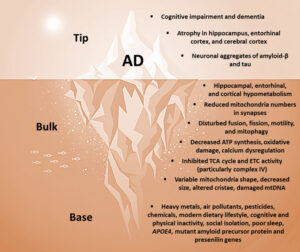
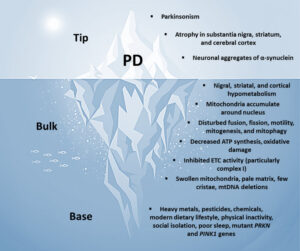
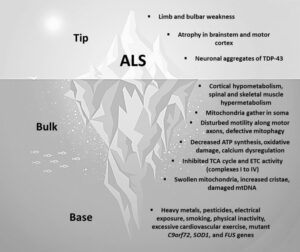
The authors employ the clever and simplistic analogy of an iceberg to help explain their research and assist our conceptualization of how our environment and lifestyle practices form the basis of the 4 neurodegenerative conditions. This is the best unified theory of neurodegeneration that I have seen. The potential for actionable and meaningful therapeutic intervention is seen to reside inherently in what the authors designate as the base of each of the iceberg models.
In the words of the authors, “Each neurodegenerative disorder may be conceptualized as a ‘metabolic iceberg’ comprised of a tip, a bulk, and a base…The hallmark clinical, anatomical, and pathological features are illustrated in the tip, which emerge as downstream effects of the core disease, impaired mitochondrial biology, in the bulk, which in turn is triggered by a particular suite of environmental and genetic factors in the base.”
Here are the authors’ 4 iceberg depictions for your review:
Alzheimer’s Disease Iceberg
Parkinson’s Disease Iceberg
Amyotrophic Lateral Sclerosis Iceberg
Huntington’s Disease Iceberg
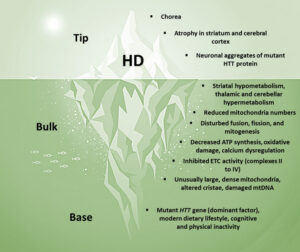
As you may be inclined, here is a table which defines the various abbreviations. Also, the main text of the article delineates more completely the nature of the important points about the base, the bulk, and the tip of each iceberg.
The “Lumping Perspective”
In one section of the article the authors conceptualize and describe the “lumping perspective” to be a way of considering the 4 separate disorders as having a common foundational derangement. This is in contrast to “splitting” the disorders apart and regarding their clinical manifestations and designing treatments aimed at managing the downstream manifestations. Clearly, the simple genius of the lumping perspective is that it encourages the researcher and the clinician to consider deeper root causes. A root cause approach implies a full body systemic approach to the disorder. Such an approach is a hallmark of holistic therapies.
The authors’ words explain the lumping perspective well in this generous and fascinating quotation extract:
“Moreover, in the same way that organisms are composed of highly specialized organs and cell types that perform complementary functions, recent evidence has revealed a diverse family of cell-specific mitochondrial phenotypes or “mitotypes” throughout the brain, each of which is energetically and metabolically optimized to meet the requirements of a particular subset of neurons and brain regions [35–38]. Based on this emerging understanding of mitochondria, a lumping perspective recognizes the hallmark clinical, anatomical, and pathological features of each neurodegenerative disorder as offshoots of a common bioenergetic and metabolic etiology, which maximally impacts subsets of mitotypes abundant in the afflicted brain regions. Lumping explains the diversity of symptoms and degenerative changes documented in other areas of the nervous system, the skeletal muscles, and heart, as all these tissues are rich in mitochondria. It also implies that approaches geared towards allopathic targeting and suppression are of limited benefit in the setting of impaired mitochondrial biology, which fundamentally requires a restorative approach [9, 39]. Essentially, lumping neurodegenerative disorders by their impaired mitochondrial biology enables them to be conceptualized as multisystemic disorders in need of multisystemic, restorative therapies.”
(References 35-38 and references 9 and 39 inserted in brackets above are live links to original supporting articles and are available for your review.)
Below we see a conceptual illustration of the lumping perspective of neurodegenerative disorders. AD Alzheimer’s disease, PD Parkinson’s disease, ALS amyotrophic lateral sclerosis, HD Huntington’s disease. Healthy mitochondrial types in the center become deranged over time and develop into deranged mitochondria affecting the different brain centers responsible for each of the 4 disorders.
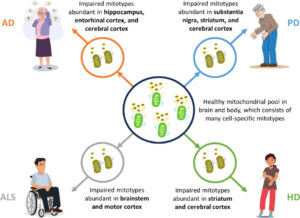
The authors’ use of the terms “cell-specific mitochondrial phenotypes or ‘mitotypes'” can be explained by the fact that the mitochondria are the only organelles in the cell which have their own DNA. This DNA is the mitochondrial genotype which gives rise to the mitochondrial phenotype. The genotype of an organism, or mitochondria, is its complete set of genetic material. Phenotype refers to the observable physical or biochemical characteristics of an organism, or mitochondria, as determined by both its genetic makeup and environmental influences. The term mitotype is a creative play on the genotype and phenotype terms. Of note, mitochondrial DNA is inherited from one’s mother. We might say that our biochemical energetics are inherited from our mothers.
An important further statement in the quote is that different mitotypes exist “throughout the brain, each of which is energetically and metabolically optimized to meet the requirements of a particular subset of neurons and brain regions.” From this clarifying statement we can understand that the numerous brain mitochondria are highly specialized to serve the energetic requirements of different neurons and brain regions.
Therapeutic Implications…Mitohormesis
In the last half of the article the authors consider various lifestyle factors within the framework of a now 93 year old therapeutic concept known as hormesis.
“In 1932, a biphasic response to harmful substances was described, called ‘hormesis’ [156]. Hormesis captures the observation that high concentrations of harmful substances lead to cell damage, whereas low levels induce adaptive responses that improve the body’s defense mechanisms and resilience [157].”
When hormesis is practiced for the mitochondria it is known as mitohormesis. The explanation of mitohormesis developed in the paper can be read and fully appreciated here.
Here is an important quotation about mitohormesis from the writing, with supporting scientific references.
“Mitohormesis encapsulates the idea that exposing mitochondria to a challenging (but not excessive) stressor leads to a recalibration of mitochondrial biology that subsequently protects the organelles against higher, normally harmful exposures to similar stressors in the future [164, 165]. Common stressors linked to mitohormesis include environmental toxins, dietary factors, cognitive stimulation, physical exercise, extreme temperatures, and hypoxia [157, 166–168]. Most of human evolution has been characterized by a mitohormesis-activating lifestyle [169], whereas many aspects of the modern lifestyle compromise mitohormesis.”
The lifestyle factors considered by the authors for hormetic therapeutic manipulation include toxin exposure, diet, cognitive behaviors, physical activity, and psychosocial behaviors. The table below shows these lifestyle factors via strategies that activate mitohormesis; optimally activated by a balanced oscillation between mitochondrial stressor and recovery phases.
| Lifestyle factors | Stressor phase | Recovery phase |
|---|---|---|
| Industrial toxins | Exposure
Transient, low-dose exposures to heavy metals, air pollutants, pesticides, and chemicals |
Non-exposure
Prolonged, near-zero dose exposures to heavy metals, air pollutants, pesticides, and chemicals |
| Dietary lifestyle | Feeding
Evolutionary hunter-gatherer diets (minimally processed, carbohydrate-restricted) |
Fasting
Fasting protocols (particularly intermittent fasting, coffee permitted) |
| Cognitive behaviours | Cognitive stimulation
Cognitive training, activities that demand sustained attention and promote engagement |
Sleep
Adequate sleep opportunity in a dedicated environment, sleep hygiene measures |
| Physical behaviours | Exercise
Relatively intensive, strength-based exercise sessions |
Deep rest
Contemplative practices (such as breathwork, mindfulness, meditation, and prayer), prioritizing sufficient rest and recovery from exercise and psychosocial engagement |
| Psychosocial behaviours | Psychosocial engagement
Social activities, networks, supports, and relationships |
The authors proposal for the incorporation of a mitohormetic therapeutic approach is stated thus: “We propose that mitohormesis may be optimally activated by strategies that facilitate a balanced oscillation between challenging (but not excessive) stressor phases, which temporarily disrupt mitochondrial biology, and complete (but not excessive) recovery phases, which provide adequate time for mitochondria to repair and recalibrate prior to the next stressor (as seen in the table above). Previous similar proposals have focused on the benefits of the stressor phase (such as diet and exercise) in activating mitohormesis, with little or no emphasis on the crucial role of the recovery phase in optimizing it. The perspective presented here expands the mitohormesis concept by emphasizing that it is optimally activated by a balanced oscillation between mitochondrial stressor and recovery phases, rather than relying on one phase over the other. By manipulating these phases to achieve an optimal balance, it may be possible to sustainably harness mitohormesis as a preventative and therapeutic measure for people at risk of, or suffering with, neurodegenerative disorders.”
Therapy for Neurodegenerative Diseases in 2025
The research science of brain mitochondria and brain energetics has moved from a blossoming to a burgeoning science. In the past few decades the neurobiology field is giving forth the fruits born from the intelligence of many dedicated researchers. The literature has exploded with thousands of articles dedicated to mitochondrial science. However, the clinical application of all of this new knowledge has not yet been translated into widespread and accepted practices which offer widespread meaningful therapeutic benefit.
However, I believe we can see a horizon in the near future when the practical application of this research will hold forth. Indeed, there are practitioners who are currently holding forth and are now birthing a new neurological subspecialty based on biochemistry, genetics, and lifestyle practices; all aimed to improve mitochondrial metabolomics. Metabolomics is the new field of medicine which considers all of the factors which influence how we produce and utilize energy at a cellular (mitochondrial) and systemic level.
Consider, if you will, this quotation from another article published in April, 2024, in the same research journal as the article explored above…Focusing on mitochondria in the brain: from biology to therapeutics.
Here is an introductory statement from this article: “The brain operates through a combination of electrical and chemical signals, and this process is highly energy-demanding [1, 2]. Neurons are the basic working units of the brain and are the most power-hungry cell type in the brain. The human brain contains nearly 100 billion neurons [3]. Each neuron is connected to up to 10,000 other neurons, exchanging signals via as many as 1000 trillion synapses [3]. Even in resting states or when neurons are not releasing neurotransmitters to each other, the brain consumes 20% of the body’s overall energy [4].”
With so many billions of neurons and so many trillions of synapses, and insomuch as each cell in our body contains 1000 to 2500 mitochondria, we will probably be looking at developing AI interfaces to generate therapeutic protocols for each individual based on individual laboratory markers, genetic markers, and all of the lifestyle factors listed in the mitohormesis table above. It may not be possible for a human brain to collate and translate so many data points and variables into a workable plan for a unique individual.
Since neurodegenerative changes begin a decade or 2 before clinical diagnosis some predictive interventions and lifestyle changes will be needed to reorient susceptible people in their 3rd and 4th decades! Of course, a further consideration and challenge is helping the public accept the importance of early healthy lifestyle habit practices. These principles could be taught in grade schools, high schools, colleges, medical schools, and elsewhere.
In 2025 there are a number of health practitioners who are working on a cutting edge of promoting lifestyle changes via metabolomics considerations.
The most notable practitioner who specializes in neurodegenerative diseases, particularly Alzheimer’s disease, is Dale Bredesen, M.D., who I wrote about in September, 2017, in the Journal entry Preventing and Reversing Dementia.
Dr. Bredesen has conducted successful clinical trials to reverse and prevent AD by utilizing his ReCODE protocol to evaluate 150 factors known to contribute to the disease. The acronym for this protocol stands for Reversal of Cognitive Decline. This protocol identifies one’s Alzheimer’s disease subtype, or combination of subtypes, so that an effective treatment protocol can be devised. Bredesen is also training and certifying health care practitioners in the ReCODE protocols. Prospective clinical trials are now underway in 6 American cities.
I encourage an exploration of Dr. Bredesen’s website at Apollo Health. Dr. Bredesen is founding, systematizing, and expounding our most advanced biochemical and lifestyle protocols to help people with Alzheimer’s disease. Many practitioners have learned his protocols. More will join this movement. And other practitioners will develop similar programs.
Conclusions
It is estimated that there are 53 million people in America who are providing assistance to those afflicted with debilitating disorders. Many of these helpers are assisting those with neurological infirmities. 26% of Americans in 2020 reported taking care of someone with dementia conditions. Approximately 8 million Americans have a dementia condition.
If you are dealing with dementia, if you know someone dealing with dementia, if you are a caregiver for someone with dementia, I recommend that you search the Institute of Functional Medicine for a practitioner near you who might be able to assist you with a metabolomics and lifestyle approach. You can also show your conventional neurologist the writing I have described in this Journal in an effort to stimulate their curiosity and interest in helping you achieve a broader approach and success. And, of course, you might become involved with Dr. Bredesen’s studies at his Apollo Clinic.
Begin to learn more about the importance of mitochondria. Once again, I refer you to my 2014 Journal writing, Minding your Mitochondria. The essential micronutrients for mitochondrial health are presented there.
It might not be possible to alter the course of those with late stage dementia. But as the science of neurodegeneration unfolds and as advances in clinical applications expand, the neurodegeneration statistics will improve.
I believe that the efforts of practitioners like Dr. Dale Bredesen are in close alignment with the lifestyle variables noted in Phillips and Picard’s mitohormesis table. Enacting the balanced hormetic oscillation between mitochondrial stressor and recovery phases that they propose will be difficult unless the general public becomes widely educated and accepting of the foundational importance of cultivating a healthy lifestyle.
I’ll close with these authors’ closing statements in their paper:
“In keeping with Ovid’s statement that obvious effects often have hidden causes, we must carefully consider the cascade of events that underlie neurodegenerative disorders. The longstanding split of these disorders based on their hallmark clinical, anatomical, and pathological features leads to the perception that they are focal neurological disorders amenable to targeted, suppressive treatments. Splitting is useful for diagnosis and management. However, treatments based on splitting alone have struggled to produce clinically meaningful outcomes. Using an alternative scientific framework, neurodegenerative disorders can be lumped by a shared feature of impaired mitochondrial biology. Lumping more accurately depicts these disorders as multisystemic disorders in need of multisystemic, restorative therapies. Since lumping emphasizes hidden causes rather than visible effects, it may get us further along the path of recognizing the modifiable etiological factors of neurodegeneration that are crucial for guiding prevention and therapy…Mitohormesis-activating strategies can be sustainably harnessed to facilitate a balanced oscillation between mitochondrial stressor and recovery phases, leading to the repair, recalibration, and recovery of mitochondria throughout the body. Ultimately, we may find success in treating the rising tide of neurodegenerative disorders by addressing the hidden energetic and metabolic causes beneath the clinical waterline, rather than by focusing exclusively on the visible effects that naturally emerge, in time, above it.”
From what I have learned about the delicate biochemical terrain of the human body, I believe that this conceptual model holds great merit. I hope to see some clinical pioneers bring it into practical focus through clinical trials and focus…just as Dr. Dale Bredesen has successfully done with his ReCODE program.
Thank you for reading and considering this further exploration of the all-important mitochondrion in our lives.
Here is a quote from Seneca, a first century Roman Stoic philosopher:
“Each of us is bound to those we love by duty, and to neglect our well-being is to fail them as much as ourselves. A sound body supports a sound mind, and both are necessary to fulfill the obligations we owe to others.”
May you seek to incorporate more healthy lifestyle habits inside of the laboratory of your life…and share your results with others!
Signing off from Crestone and Beyond
I have written a collection of Journals on brain health which can be seen at these links on the website:
- Brain Health
- Brain Health and the Degenerative Disease Spectrum
- Blood Sugar and Brain Health
- Brain Health Nutrients
- The Present Moment, a Brain Health Journal
- Brain Wash
In addition, there are other Journal writings on subjects which support brain health:
Other Associated Readings
- New Blood Test May Predict Alzheimer’s Risk Up to 10 Years Before Symptoms Begin…posted here on 10-11-26. “A new blood test identified cognitively healthy adults who faced a higher risk of memory and thinking decline up to 10 years before symptoms became noticeable, offering a much earlier window to understand brain health…Higher blood levels of the Alzheimer’s-related protein were linked to a steadily increasing risk of cognitive decline and predicted future problems even after researchers accounted for expensive brain imaging results…The study showed that people with the highest blood test results experienced faster declines in memory and thinking over time, suggesting that harmful brain changes begin years before a diagnosis is made…The blood test isn’t recommended for routine screening of healthy adults outside research settings, but the findings reinforce that Alzheimer’s develops gradually rather than appearing suddenly…Supporting healthy mitochondria by reducing oxidative stress, avoiding seed oils, eating enough nutrient-dense carbohydrates and protein, getting regular sunlight, and maintaining healthy metabolic function targets biological processes that may support brain resilience as you age.”
- Common Pesticide Linked to More Than Double the Risk of Parkinson’s Disease…posted here on 9-14-26. “Long-term residential exposure to the insecticide chlorpyrifos was associated with more than a 2.5-fold higher risk of developing Parkinson’s disease, adding to growing evidence that certain pesticides may pose a significant risk to brain health…Researchers strengthened the findings by showing that chlorpyrifos produced similar Parkinson’s-like changes in laboratory animals (via mice exposed by inhalation over 11 weeks), including loss of dopamine-producing nerve cells, harmful protein buildup, and chronic brain inflammation…The pesticide disrupted the brain’s natural recycling system in these animal models, allowing damaged proteins to accumulate inside nerve cells instead of being cleared away, which may help explain how exposure could contribute to Parkinson’s disease in humans…A lawsuit against Dow Chemical, Corteva and FMC Corporation, the companies that developed and originally marketed chlorpyrifos, alleges they failed to adequately warn users about the pesticide’s neurological risks, bringing renewed attention to the dangers faced by agricultural and pest control workers…Reducing repeated pesticide exposure, supporting gut health, staying physically active, managing stress, and maintaining healthy vitamin D levels are practical steps that may help support long-term brain health, though evidence connecting them specifically to Parkinson’s disease risk is still developing.”
- The Alzheimer’s Gut-Brain Link: How Butyrate Curbs Amyloid-Beta Buildup and Inflammation…posted here on 5-11-26. The main points of this writing are: “Animal models suggest Alzheimer’s disease begins in your gut years before memory loss appears, which means early digestive symptoms like constipation may be a warning sign you can act on now…Amyloid-beta builds up in your gut first, damages nerve signaling there, and then spreads to your brain, linking gut health directly to cognitive decline…Research suggests butyrate, a compound your gut bacteria produce, blocks amyloid buildup, reduces inflammation, and preserves memory when your gut environment supports it…Modern diets high in inflammatory fats and low in supportive nutrients disrupt butyrate production, breaking the communication between your gut and brain…Restoring your gut through targeted diet changes, removing harmful vegetable oils, and supporting healthy daily habits helps rebuild butyrate production and protects your brain long before symptoms start.”
- Mitochondrial Dysfunction in Neurodegenerative Disorders…posted here on 4-10-26. This article reinforces all of the above. The main points in this article are: “Mitochondrial dysfunction is a key driver of neurodegeneration, with research showing that a single resting cortical neuron requires 4.7 billion ATP molecules every second for energy…When mitochondria lose their efficient shape, electrons escape and form reactive oxygen species (ROS), triggering cellular damage and stress that particularly affects brain cells…Research shows 42% of adults over 55 develop dementia by age 95, with projected new cases expected to double from 514,000 in 2020 to 1 million by 2060…Mitochondria act as cellular calcium buffers — when this function fails, calcium floods cells and triggers the mitochondrial permeability transition pore, leading to widespread neuron death…Key mitochondrial health strategies include eliminating seed oils, optimizing carbohydrate intake, reducing environmental toxin exposure, getting proper sun exposure and boosting NAD⁺ levels through supplements.”
- Reversing Alzheimer’s–The Forgotten Causes and Cures Big Pharma Buried…posted here on 3-29-26 is a good summary of important considerations from The Midwestern Doctor. The main points covered are: “Due to Alzheimer’s research focusing on a symptom of it (amyloid plaques), rather than its actual cause, Alzheimer’s has remained “incurable” for decades…Rather than being a single disease, Alzheimer’s has multiple different subtypes (e.g., those due to insulin resistance, nutritional deficiencies, inflammation, infections, or concussions), each of which requires a different treatment…Impaired blood circulation to the brain and lymphatic drainage from the brain are often the primary trigger that initiates the degenerative process seen in Alzheimer’s disease. Factors which impair this circulation (e.g., poor sleep) hence roughly double the risk of dementia, while treatments which improve this circulation frequently produce remarkable improvements for cognitive decline and dementia…DMSO is an effective treatment for brain injuries like strokes, and well-suited to address many of the root causes of dementia and reverse the degenerative state that dying neurons get trapped in. Because of this, there are many reports of it reversing dementia and clinical trials in both humans and animals corroborating these improvements.”
- The Surprising Role of Cortisol in Alzheimer’s…posted here on 3-18-26. “New research shows that people with Alzheimer’s have higher cortisol levels and a skewed cortisol-to-DHEA-S ratio, revealing that chronic stress drives early brain degeneration long before memory loss appears…Cortisol, your body’s main stress hormone, damages neurons and disrupts energy metabolism when it stays elevated, while DHEA-S acts as a protective neurosteroid that helps your brain resist inflammation and oxidative stress…Bioenergetic researcher Georgi Dinkov connected these findings to thyroid and metabolic health, showing that when your cells don’t produce enough energy, cortisol rises and accelerates cognitive decline…Tracking your cortisol-to-DHEA-S ratio offers a powerful early warning sign for chronic stress and neurodegeneration, allowing you to take preventive action years before symptoms develop…You can rebalance these hormones naturally by fueling your metabolism with adequate healthy carbohydrates, improving sleep and light exposure, reducing overtraining, practicing calming breathwork, and using natural progesterone to help quiet cortisol.”
- Parkinson’s Disease Is Rising and Lifestyle Choices Play a Major Role…posted here on 1-22-26. This article supports everything written above. The main points covered here are: “Parkinson’s disease is rising rapidly worldwide, and most cases are driven by lifestyle and environmental stressors rather than genetics, meaning daily choices play a powerful role in risk and progression…The disease often begins years before diagnosis, with early signs like poor sleep, digestive issues, anxiety, and fatigue signaling stress on your brain long before tremors appear…Chronic inflammation, toxin exposure, poor sleep, and metabolic strain weaken dopamine-producing neurons, but improving sleep, movement, diet, and stress regulation slow this damage…Supporting gut health, reducing exposure to environmental toxins, and maintaining steady energy through proper nutrition help protect your brain and preserve mobility and cognition…Consistent habits that lower stress, improve sleep quality, encourage movement, and support vitamin D balance give your brain the conditions it needs to stay resilient over time.”
- Reclaim Your Cellular Health with the Mitochondria Protocol…posted here on 1-11-26. An important consideration of good dietary practices for mitochondrial health. The main points presented are: “Linoleic acid embeds in mitochondrial membranes where free radicals are generated, producing toxic aldehydes like 4-HNE that damage the electron transport chain and accelerate metabolic degradation throughout the body…Mitochondria form adaptive energy networks responding to sleep, exercise, and stress, producing your body weight in ATP daily while performing essential maintenance like clearing debris and supporting new brain cell growth…Brain diseases like Alzheimer’s and Parkinson’s stem from failing mitochondria that struggle to produce energy, remove harmful proteins, and maintain cellular communication, leading to cognitive decline and movement problems…Strengthen mitochondria through varied exercise routines (higher-intensity movement builds new mitochondria, cardio improves efficiency, strength training increases numbers), consistent sleep schedules, daytime-aligned eating, and cautious sauna use at moderate temperatures…Minimize linoleic acid intake to less than 2 to 3 grams daily by avoiding vegetable oils and ultraprocessed foods. You can accelerate clearance using C15:0 fat from raw, grass fed dairy.”
- Hypertension and Brain Health–How High Blood Pressure Damages Your Brain…posted here on 1-8-26. The important points of this article are: “Nearly half of U.S. adults have undiagnosed hypertension, which increases risks for stroke, heart attack, and early brain impairment due to reduced oxygen and nutrient delivery to neural tissue…Early hypertension triggers rapid cellular damage, including endothelial aging, neuronal energy loss, myelin disruption, and blood-brain barrier leakage, all of which accelerate inflammation and cognitive decline even before symptoms appear…Long-term high blood pressure leads to changes such as white matter hyperintensities, microbleeds, and brain volume loss. These findings are strongly linked to slower processing, stroke risk, and dementia…Dementia risk rises with midlife hypertension, and older adults with high blood pressure show accelerated brain aging; regular monitoring beginning around age 40 helps reduce long-term cognitive decline…Treatment can reverse some early damage, while lifestyle strategies such as diet changes, exercise, and better sleep significantly lower blood pressure and help protect long-term brain health.”
- Reversing Alzheimer’s: The Forgotten Causes and Cures Big Pharma Buried…posted here on 12-14-25. This important contribution is from The Midwestern Doctor. “Due to Alzheimer’s research focusing on a symptom of it (amyloid plaques), rather than its actual cause, Alzheimer’s has remained ‘incurable’ for decades…Rather than being a single disease, Alzheimer’s has multiple different subtypes (e.g., those due to insulin resistance, nutritional deficiencies, inflammation, infections, or concussions), each of which requires a different treatments.” Please read on!
- Alcohol Raises Dementia Risk at Every Level of Drinking…posted here on 11-30-25. The main points of this article are: “A study found that alcohol raises dementia risk at every level of drinking, overturning decades of claims that moderate use protects your brain…Even light drinking damages neurons, disrupts mitochondrial energy production, and accelerates brain aging, showing there is no safe dose for cognitive health…Genetic data revealed that for every measurable increase in alcohol consumption, dementia risk rose by about 15%, with the danger extending across all age and ancestry groups…Alcohol and linoleic acid (LA) from seed oils follow the same toxic pathway in your liver, creating harmful aldehydes that cause mitochondrial damage and fatty liver disease, both of which impair brain function…Reducing or eliminating alcohol and cutting seed oils to under 5 grams per day — ideally 2 grams — support liver recovery, restore mitochondrial function, and protect long-term brain health.”
- Science Finds Your Brain and Judgment Peak Around Age 60…posted here on 11-23-25. Main points here: “New research shows that overall human performance — combining intelligence, emotional balance, and judgment — peaks between ages 55 and 60, making midlife a time of strength, not decline…While mental processing speed slows with age, emotional intelligence, wisdom, and decision-making power continue to grow, helping you handle stress and relationships more effectively…Your brain adapts by strengthening networks that regulate emotion and memory, allowing smoother coordination between thought and feeling for wiser, more integrated choices…Eliminating seed oils high in linoleic acid (LA) and eating about 250 grams of healthy carbohydrates daily supports cellular energy and protects brain function…Staying physically active, prioritizing sleep, and pursuing lifelong learning help maintain focus, clarity, and vitality — proving that your 50s and 60s can be your most productive, fulfilling decades.”
- The Great Alzheimer’s Scam and the Proven Cures They’ve Buried for Billions…posted here on 10-31-25. The Midwestern Doctors holds forth with the story of how the Pharma people have duped us into to believing in the Amyloid Industry. This is so they could have us eat drugs that are supposed to get rid of amyloid which everyone now believes is the cause of Alzheimer’s, but it is not. There is much more to know about the underlying causes. Here are the main points of the Doctor’s writing: “Alzheimer’s disease is commonly thought to result from abnormal plaque buildup in the brain that gradually destroys brain tissue. Almost all Alzheimer’s research for decades has been directed toward eliminating amyloid, even after the basis for much of this work was shown to stem from fraudulent research…The billions spent on amyloid Alzheimer’s research have only produced three drugs, all of which offer minuscule benefits and severe side effects…In contrast, affordable and straightforward treatments that reduce dementia or the preceding cognitive impairment have been maligned and buried by the medical industry…DMSO for example, has incredible neuroprotective qualities that have spared many stroke and spinal cord injury victims from a life of “incurable” disability. Decades of forgotten research also show it treats cognitive impairment and dementia…This article will review the great amyloid scam and the simple therapies for cognitive decline we’re never told about.”
- Reversing Alzheimer’s–The Forgotten Causes and Cures Big Pharma Buried…posted here on 11-7-25 is another version of the writing immediately above and will be easier to read and study. The Midwestern Doctor explains in this informative article. Main points covered include: “Due to Alzheimer’s research focusing on a symptom of it (amyloid plaques), rather than its actual cause, Alzheimer’s has remained “incurable” for decades…Rather than being a single disease, Alzheimer’s has multiple different subtypes (e.g., those due to insulin resistance, nutritional deficiencies, inflammation, infections, or concussions), each of which requires a different treatment…Impaired blood circulation to the brain and lymphatic drainage from the brain are often the primary trigger that initiates the degenerative process seen in Alzheimer’s disease. Factors which impair this circulation (e.g., poor sleep) hence roughly double the risk of dementia, while treatments which improve this circulation frequently produce remarkable improvements for cognitive decline and dementia…DMSO is an effective treatment for brain injuries like strokes, and well-suited to address many of the root causes of dementia and reverse the degenerative state that dying neurons get trapped in. Because of this, there are many reports of it reversing dementia and clinical trials in both humans and animals corroborating these improvements…This article will review the actual causes of dementias like Alzheimer’s and the forgotten therapies many have successfully used to cure them.”
- Zone 2 Training Builds Endurance and Supports Long Term Fitness Without Burnout…posted here on 8-15-25. To estimate your target Zone 2 range, subtract your age from 220, then multiply that number by 0.6 and 0.7. For women, use 206 – (0.88 x your age) for a more accurate maximum. If you can speak in short phrases but need to pause for breath, you’re likely in the right zone. High points of this article: “Zone 2 training helps your body burn fat more efficiently while protecting your muscles, brain, and bones from the damaging effects of stress hormones like cortisol…This low-to-moderate intensity exercise zone builds endurance, improves mitochondrial function, and enhances oxygen delivery without exhausting your body…Unlike high-intensity workouts that cause fatigue, inflammation, and injury, Zone 2 lets you train consistently, recover faster and avoid burnout…Regular Zone 2 activity strengthens your cardiovascular system, lowers blood pressure and increases insulin sensitivity, all without needing extreme effort…To get the benefits of Zone 2, engage in daily activities like walking, hiking, or cycling as long as your heart rate stays within the target range.”
- Mitochondrial Dysfunction in Neurodegenerative Disorders…posted here on 3-31-25. This Mercola article highlights the information presented in an article which appeared in Neurotherapeutics in December, 2023. This article, and Mercola’s summary of it, corroborates the critical importance of the mitochondria in brain health, as is written about above. “Mitochondrial dysfunction is a key driver of neurodegeneration, with research showing that a single resting cortical neuron requires 4.7 billion ATP molecules every second for energy.” ATP is made in the mitochondrion.
- Butyrate–The Gut-Brain Axis Connector That Influences Mood and Cognition…a 3-24-25 Mercola article that explains some of the current research on butyrate’s influence on neurological health. Key points in this article include: “Butyrate, produced by gut bacteria when they ferment dietary fiber, acts as a signaling molecule in the gut-brain axis, influencing stress, pain tolerance, immunity, and brain health…Through multiple mechanisms, including specific enzyme inhibition and NF-κB pathway regulation, butyrate reduces neuroinflammation and protects against neurodegenerative conditions like Alzheimer’s and Parkinson’s disease…Butyrate influences key neurotransmitters including GABA, serotonin, and dopamine, while also increasing brain-derived neurotrophic factor (BDNF), which supports neuronal growth and cognitive function…The vagus nerve serves as a communication highway between the gut and the brain, transmitting signals about butyrate levels that affect mood regulation, stress response, and immune function…Optimizing gut health through dietary fiber and homemade fermented foods helps promote butyrate production and maintain a healthy gut-brain connection.”
- How Aerobic Exercise Like Walking Protects Against Dementia…posted here on 3-21-25. Key points in this article include: “Animal research on rats found that aerobic exercise significantly reduced key markers of Alzheimer’s disease, including a 63% decrease in tau tangles, a 76% reduction in amyloid plaques, and a 58% drop in iron accumulation in the brain…Exercise improves axon-myelin relationships in the brain, leading to healthier nerve fibers and more effective communication between brain cells…By 2050, Alzheimer’s cases in the U.S. are projected to more than double to 12.7 million, highlighting the urgent need for preventive measures like regular exercise…A 30-year study found that consistent physical activity, especially before age 50, leads to larger hippocampal volume and better cognitive resilience at age 70…Walking is an accessible exercise for almost everyone; taking an hour walk daily at a brisk pace provides brain-protective benefits, offering significant protection against cognitive decline.”
- Dale Bredesen–How to Help Prevent and Treat Alzheimer’s Disease…posted here on 3-16-25. Dr. Mercola interviews Dale Bredesen. Main points covered include: “In 2014, Dr. Dale Bredesen published a paper demonstrating healthy lifestyle choices could reverse Alzheimer’s in nine out of 10 patients. His team is launching a randomized, controlled trial at six sites. Biological aging, brain aging and epigenetics are included in this trial, using newer blood tests that weren’t available even a few years ago…The glial fibrillary acidic protein (GFAP) test is a valuable tool. This test basically looks at brain changes associated with astrocytosis. Astrocytes respond when there’s a problem in the brain, so it gives you a heads-up that something is afoot up to 10 years before symptoms set in…Supporting energy production and reducing inflammation in the brain are the two most important factors to prevent and treat Alzheimer’s…The entire family of herpes viruses is associated with changes in the brain and neurons. Left untreated, chronic infections put your innate immune system into overdrive. Alzheimer’s is an innate immune system mismatch with the adaptive system. You’re not clearing the pathogen, so you’ve got a continued onslaught of cytokines causing damage in your brain…Valuable adjuncts that help improve mitochondrial energy production include methylene blue, niacinamide, NAC and glycine.”
- Cellular Health Revolution–Unveiling Hidden Threats and Empowering Solutions…posted here on 2-2-25. This timely Mercola article covers the importance of mitochondrial health. Dr. Mercola has worked diligently for all of his professional career to disclose valuable health information. Here are the main points covered: “In my appearance on The Jimmy Dore Show, we discussed how mitochondrial dysfunction, caused by modern toxins, is at the root of many diseases. ATP production has decreased by up to 75% compared to a century ago…I shared insights from my latest book, ‘Your Guide to Cellular Health: Unlocking the Science of Longevity and Joy,‘ including that seed oils, like soybean and corn oil, are major culprits in damaging cellular health, while natural sugars can be beneficial when used wisely…Endocrine-disrupting chemicals and EMFs from devices like cellphones and Wi-Fi routers pose significant risks to mitochondrial function, necessitating practical steps to reduce exposure…Powerful foundations and industry interests have shaped medical education and public health policies, often prioritizing pharmaceutical interventions over natural approaches…Restoring cellular health involves eliminating toxins, adopting a whole foods diet, optimizing sun exposure and addressing gut health imbalances.”
- How to Help Prevent and Treat Alzheimer’s Disease…a January 9, 2025, Mercola article and interview with Dale Bredesen M.D. about updates in his ReCODE trials, which are now happening in 6 cities. “In 2014, Dr. Dale Bredesen published a paper demonstrating healthy lifestyle choices could reverse Alzheimer’s in 9 out of 10 patients. His team is now launching a new randomized, controlled trial at six sites. Biological aging, brain aging and epigenetics will be included in this trial, using newer blood tests that weren’t available even a few years ago.”
- The End of Alzheimer’s, The First Program to Prevent and Reverse Cognitive Decline…Dr. Bredesen’s 2017 book announcing his ReCODE protocol and clinical research.
- Could Mitochondria Be the Key to a Healthy Brain?…a June 18, 2021 publication in Scientific American. This is a nice article with a focus on mitochondrial DNA.
- Mitochondria–Fundamental to Life and Health…an article published in April, 2014 in Integrative Medicine: A Clinician’s Journal, by Joseph Pizzorno, N.D. This is an example of just one holistic practitioner who has made mitochondrial health a focus in his practice. Dr. Pizzorno is well known in the field of holistic medicine.
- Gardenia Compound Offers Hope for Rare Genetic Disorder…posted here on 3-19-25 is an article about a botanical compound from the gardenia plant that helps restore nerves and nerve function. As time goes by more and more phytochemicals will be discovered that will help human diseases. This has always been the case. Nature is highly and completely integrated to care for itself and all of its parts. Humans are a part of this Oneness with Nature. It is a Divine relationship, holographically and fractally entangled with Itself. Here are some summary points from this article: “Genipin, derived from gardenia plants, restores nerve development, and reduces neurodegeneration in patients with familial dysautonomia, a rare genetic disorder that affects the peripheral nervous system…Originally discovered as a blue dye source in the 1980s, genipin has evolved from a food science application to a therapeutic compound with several medical applications…Genipin works by interacting with the extracellular matrix and reorganizing cellular structure, promoting nerve repair and axon regeneration in both the peripheral and central nervous systems…Studies show genipin protects against diabetic retinopathy by controlling advanced glycation end products (AGEs) and reducing oxidative stress, which helps prevent vision loss in diabetic patients…In neuroblastoma research, genipin demonstrates significant anticancer properties by triggering cell death and effectively suppressing tumor growth without toxic side effects.”
- One New Experience a Day Boosts Memory and Mood…posted here on 4-20-25. Highlights of this article are: “Introducing even one new experience daily, such as trying a new recipe or taking a different walking route, improves memory and boosts mood, making days feel more meaningful…Visiting diverse locations, even within your local area, is linked to increased happiness, highlighting that the novelty of surroundings, rather than travel distance, positively impacts emotional well-being…Novelty activates your brain’s memory and reward centers, reinforcing motivation and emotional health; this suggests seeking new experiences is inherently rewarding for your brain…Tracking and reflecting on new experiences strengthens memory recall, boosts overall mood and helps break the cycle of boredom by creating a positive feedback loop of action and awareness…Small, manageable changes to your daily routine are enough to trigger these positive effects; your brain thrives on difference, not necessarily dramatic or grand events.”